Volunteer or club coach, everything here is ready for the field. Build a practice in seconds, grab the guide for your age group, or print a one-page tool.
The Development Culture™ practice framework for your age group: day one, a sample practice, a game bank, what to say and fuel and rest, in a few pages you can keep on your clipboard.
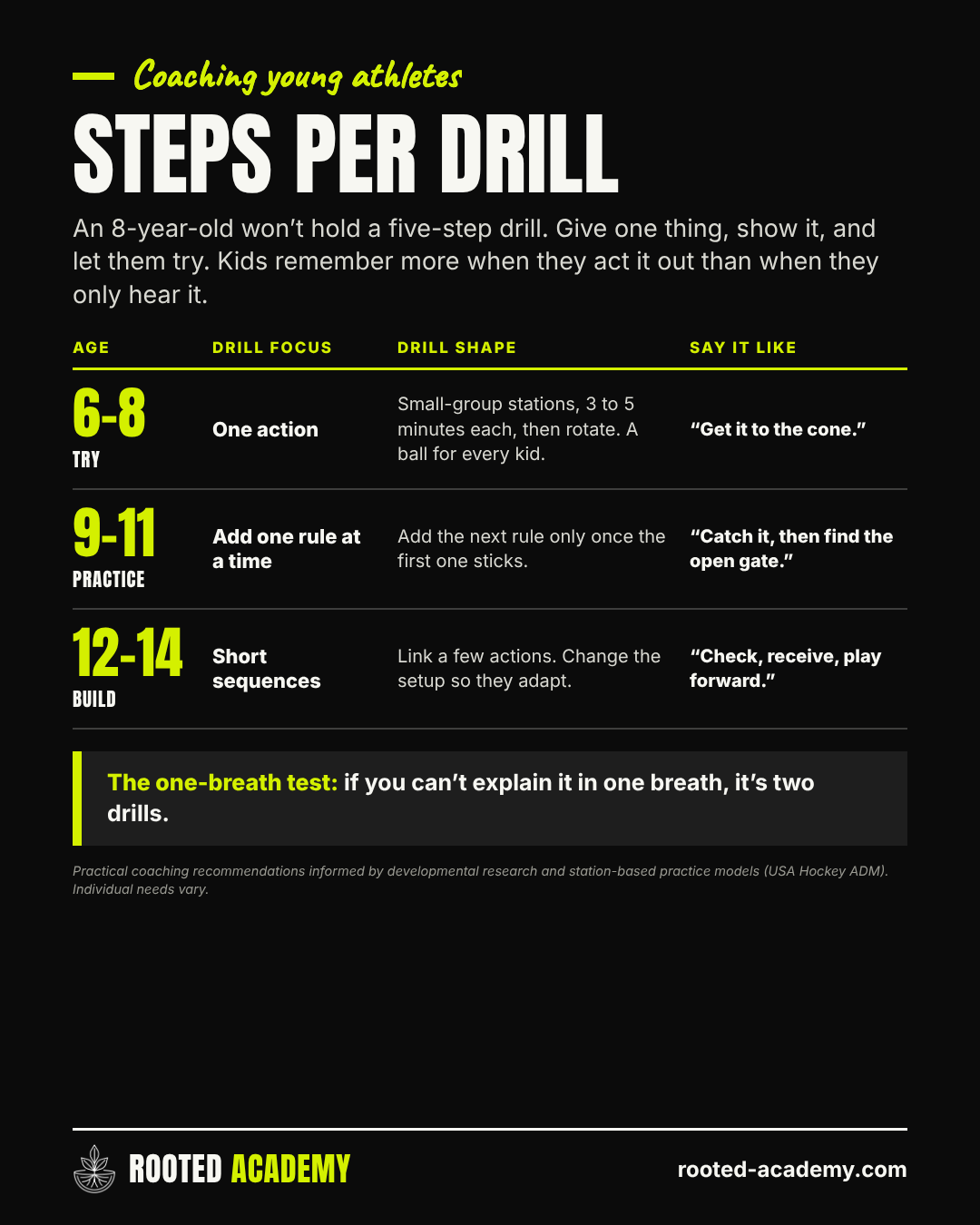
Ages 6 to 8Foundations coach guideFun first: ready position, eyes up and every kid moving
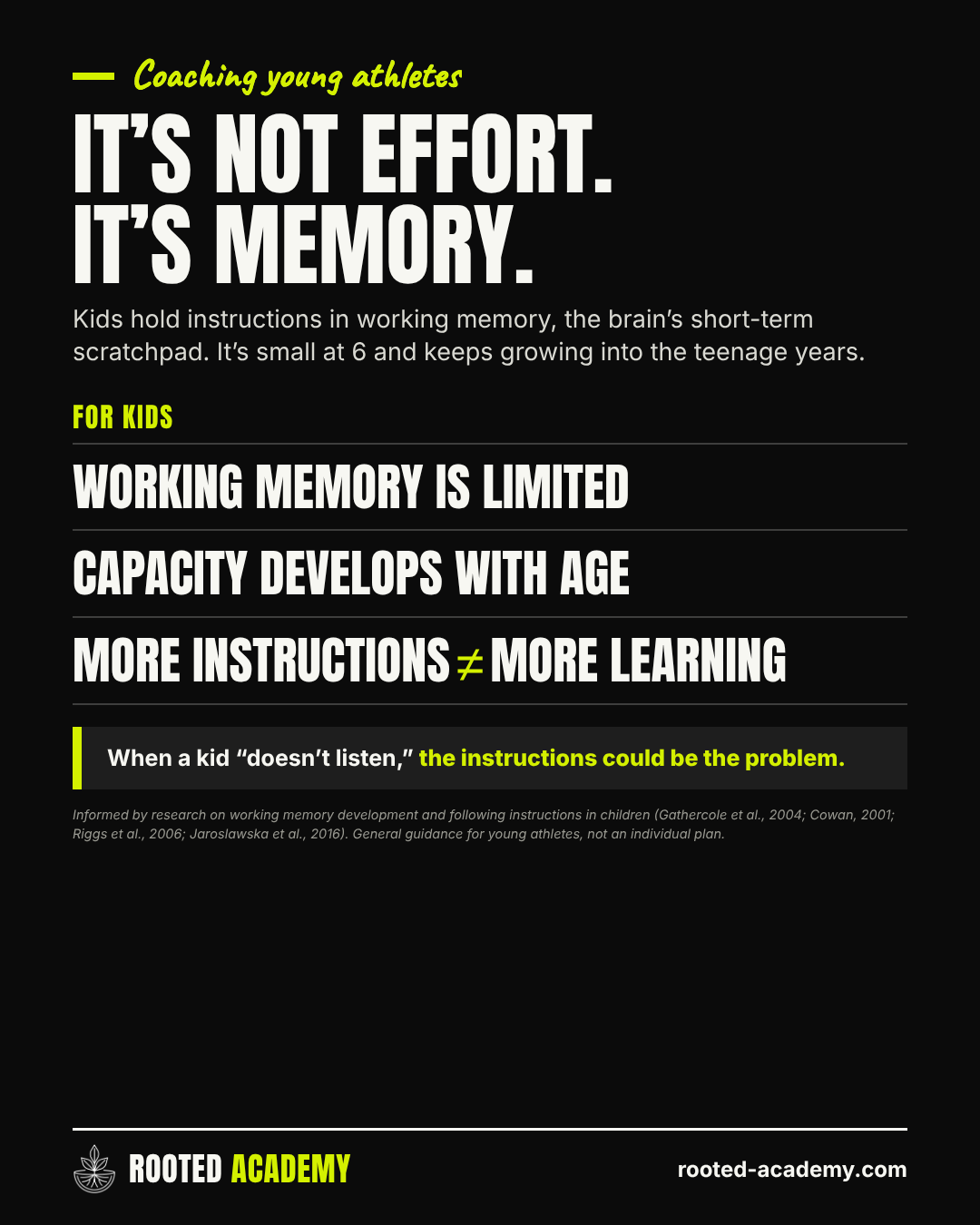
Gathercole, S. E., Pickering, S. J., Ambridge, B., & Wearing, H. (2004). The structure of working memory from 4 to 15 years of age. Developmental Psychology. doi
Riggs, K. J., McTaggart, J., Simpson, A., & Freeman, R. P. J. (2006). Changes in the capacity of visual working memory in 5- to 10-year-olds. Journal of Experimental Child Psychology.
Cowan, N. (2001). The magical number 4 in short-term memory. Behavioral and Brain Sciences.
Jaroslawska, A. J., Gathercole, S. E., Logie, M. R., & Holmes, J. (2016). Following instructions in a virtual school: Does working memory play a role? Memory & Cognition. article
Yang, T., et al. (2017). Impaired memory for instructions in children with ADHD is improved by action at presentation and recall. Frontiers in Psychology. article
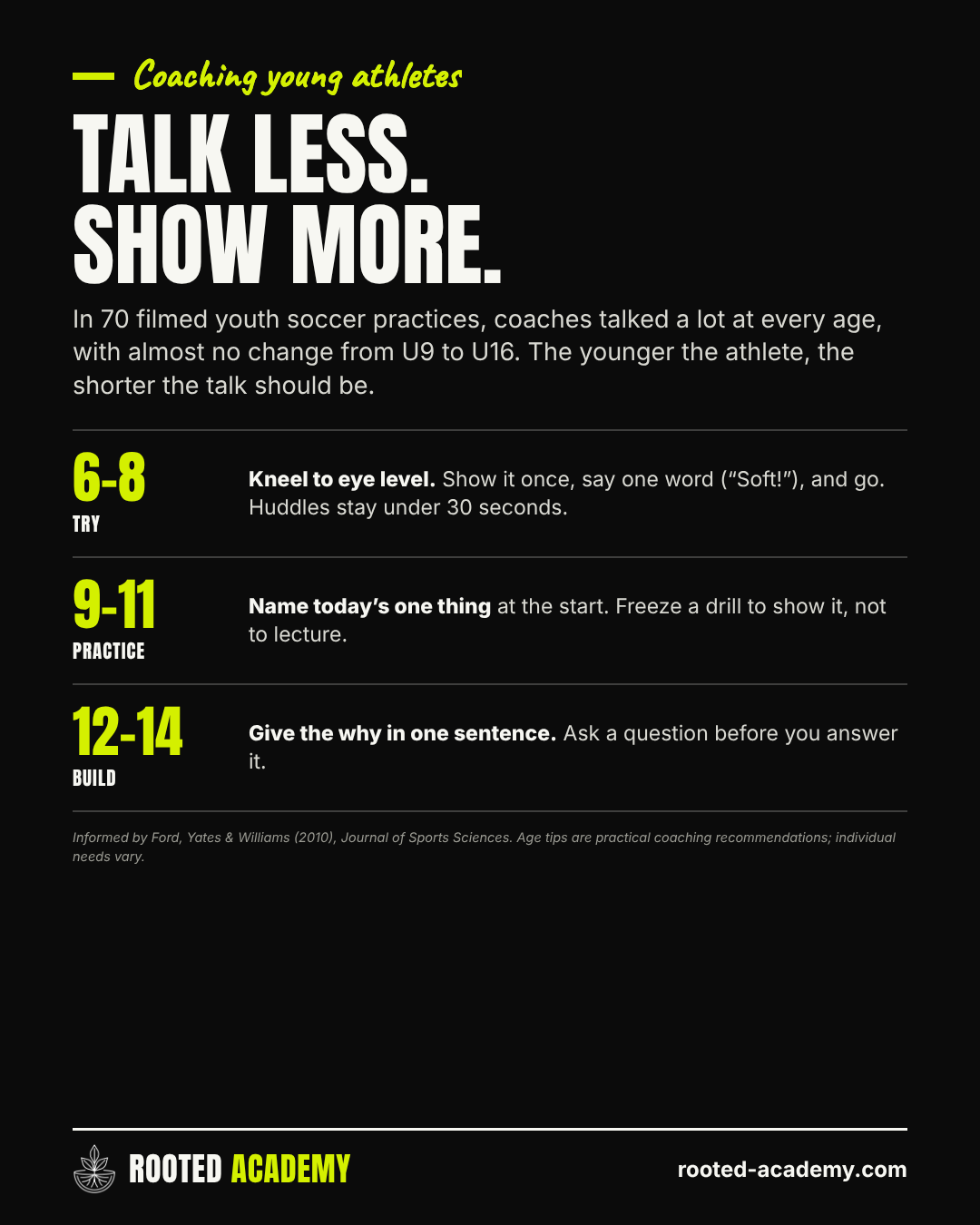
Ford, P. R., Yates, I., & Williams, A. M. (2010). An analysis of practice activities and instructional behaviours used by youth soccer coaches during practice. Journal of Sports Sciences.
USA Hockey American Development Model. Basic structure for 8U practices (station-based practice, small-area games). admkids.com
Ghanamah, R., Eghbaria-Ghanamah, H., Karni, A., & Adi-Japha, E. (2020). Too little, too much: A limited range of practice 'doses' is best for retaining grapho-motor skill in children. Learning and Instruction, 69, 101351.
Positive Coaching Alliance. Winner's Circle post-game guidance for coaches. devzone.positivecoach.org
Game day (1)
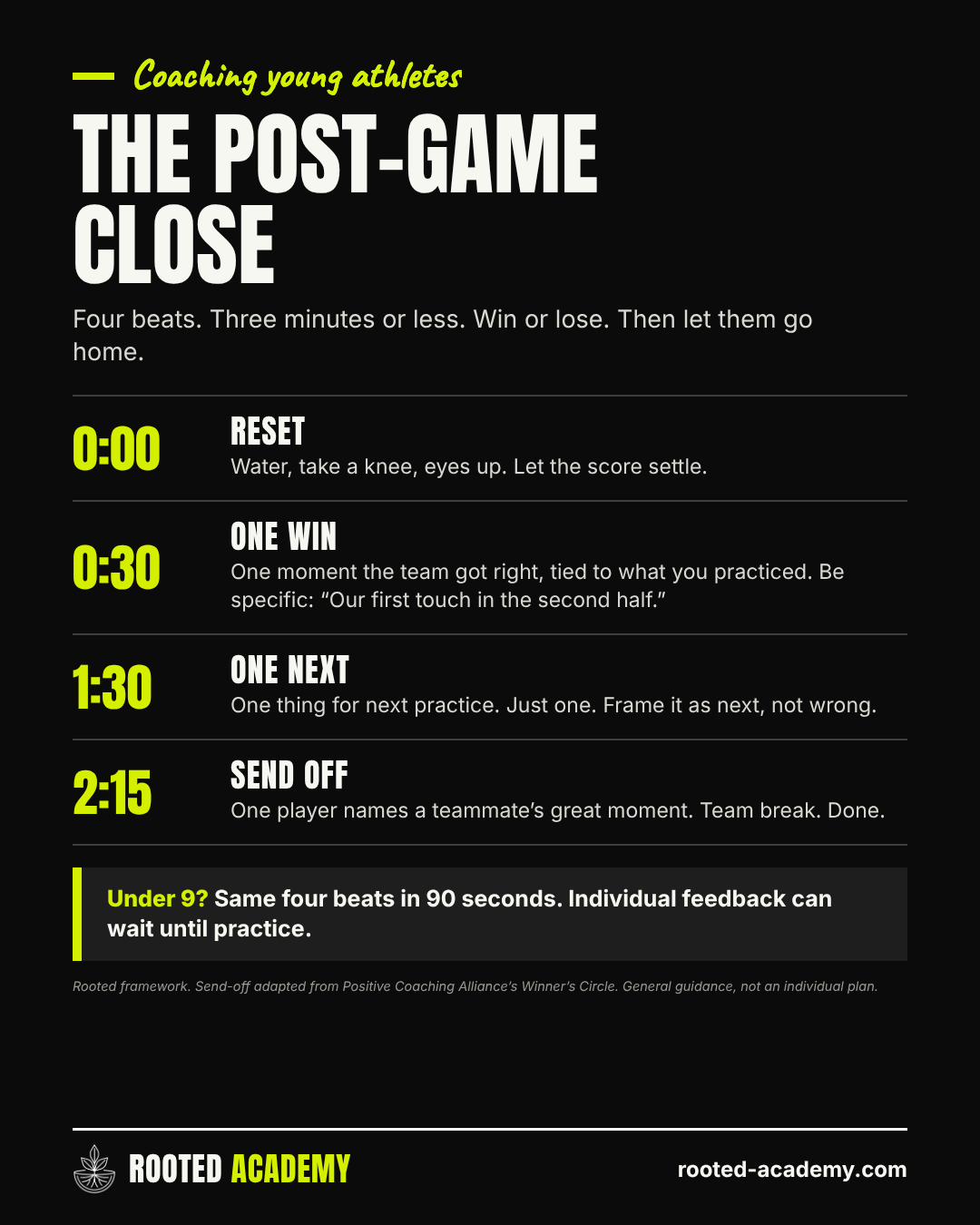
A three-minute routine to end every game on development, not the scoreboard.
MindThe post-game closeA three-minute way to end every game
Gathercole, S. E., Pickering, S. J., Ambridge, B., & Wearing, H. (2004). The structure of working memory from 4 to 15 years of age. Developmental Psychology. doi
Riggs, K. J., McTaggart, J., Simpson, A., & Freeman, R. P. J. (2006). Changes in the capacity of visual working memory in 5- to 10-year-olds. Journal of Experimental Child Psychology.
Cowan, N. (2001). The magical number 4 in short-term memory. Behavioral and Brain Sciences.
Jaroslawska, A. J., Gathercole, S. E., Logie, M. R., & Holmes, J. (2016). Following instructions in a virtual school: Does working memory play a role? Memory & Cognition. article
Yang, T., et al. (2017). Impaired memory for instructions in children with ADHD is improved by action at presentation and recall. Frontiers in Psychology. article
Ford, P. R., Yates, I., & Williams, A. M. (2010). An analysis of practice activities and instructional behaviours used by youth soccer coaches during practice. Journal of Sports Sciences.
USA Hockey American Development Model. Basic structure for 8U practices (station-based practice, small-area games). admkids.com
Ghanamah, R., Eghbaria-Ghanamah, H., Karni, A., & Adi-Japha, E. (2020). Too little, too much: A limited range of practice 'doses' is best for retaining grapho-motor skill in children. Learning and Instruction, 69, 101351.
Positive Coaching Alliance. Winner's Circle post-game guidance for coaches. devzone.positivecoach.org
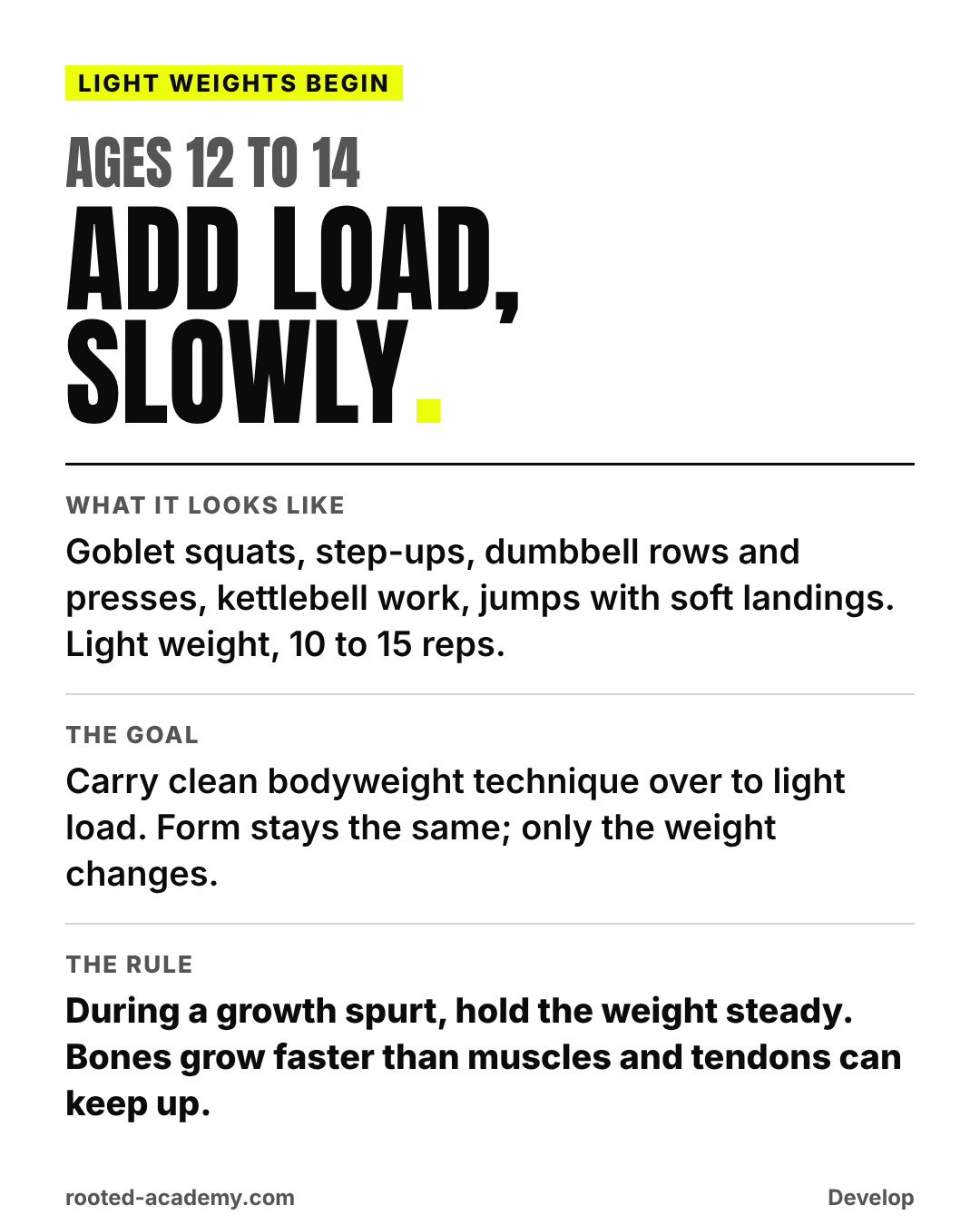
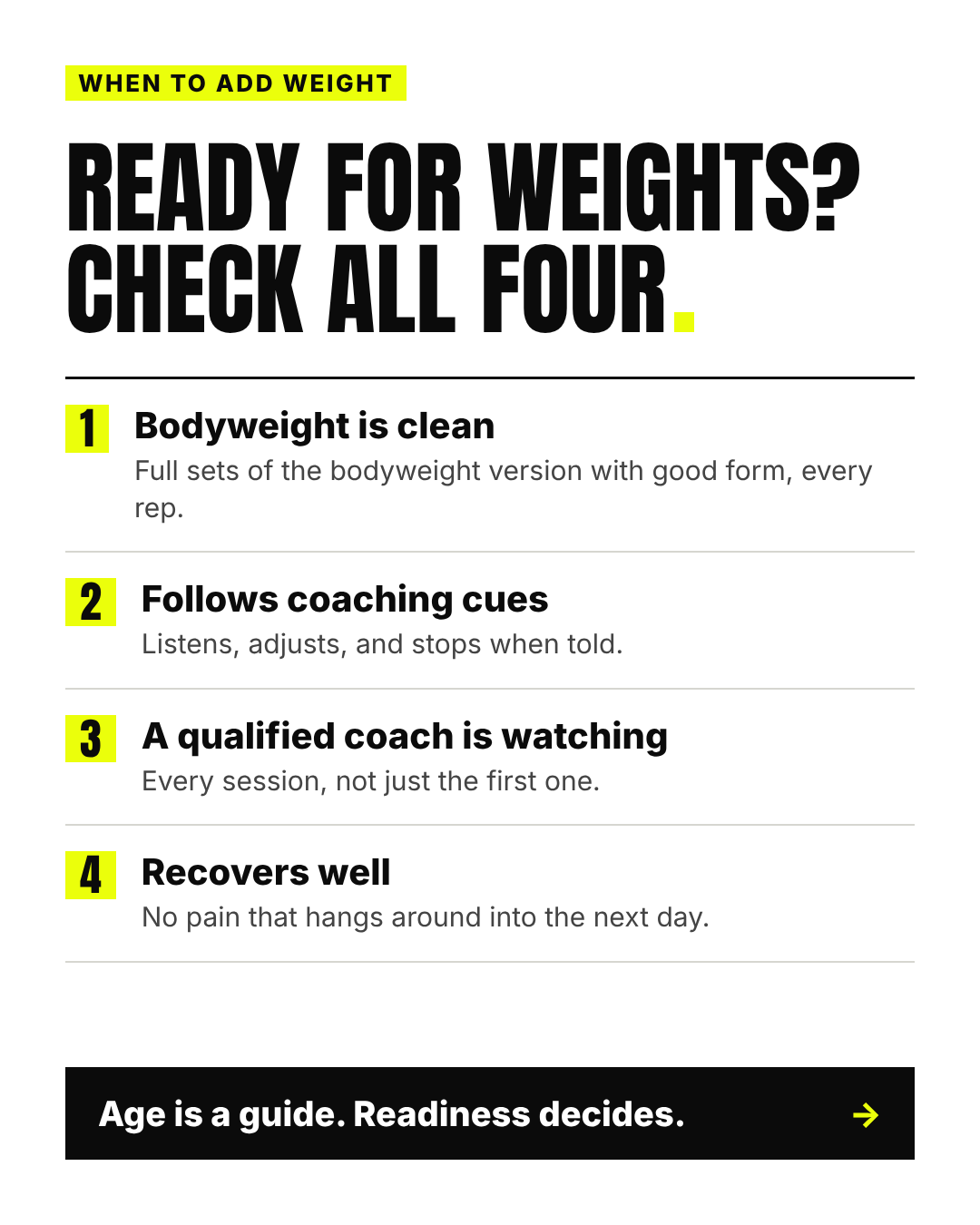
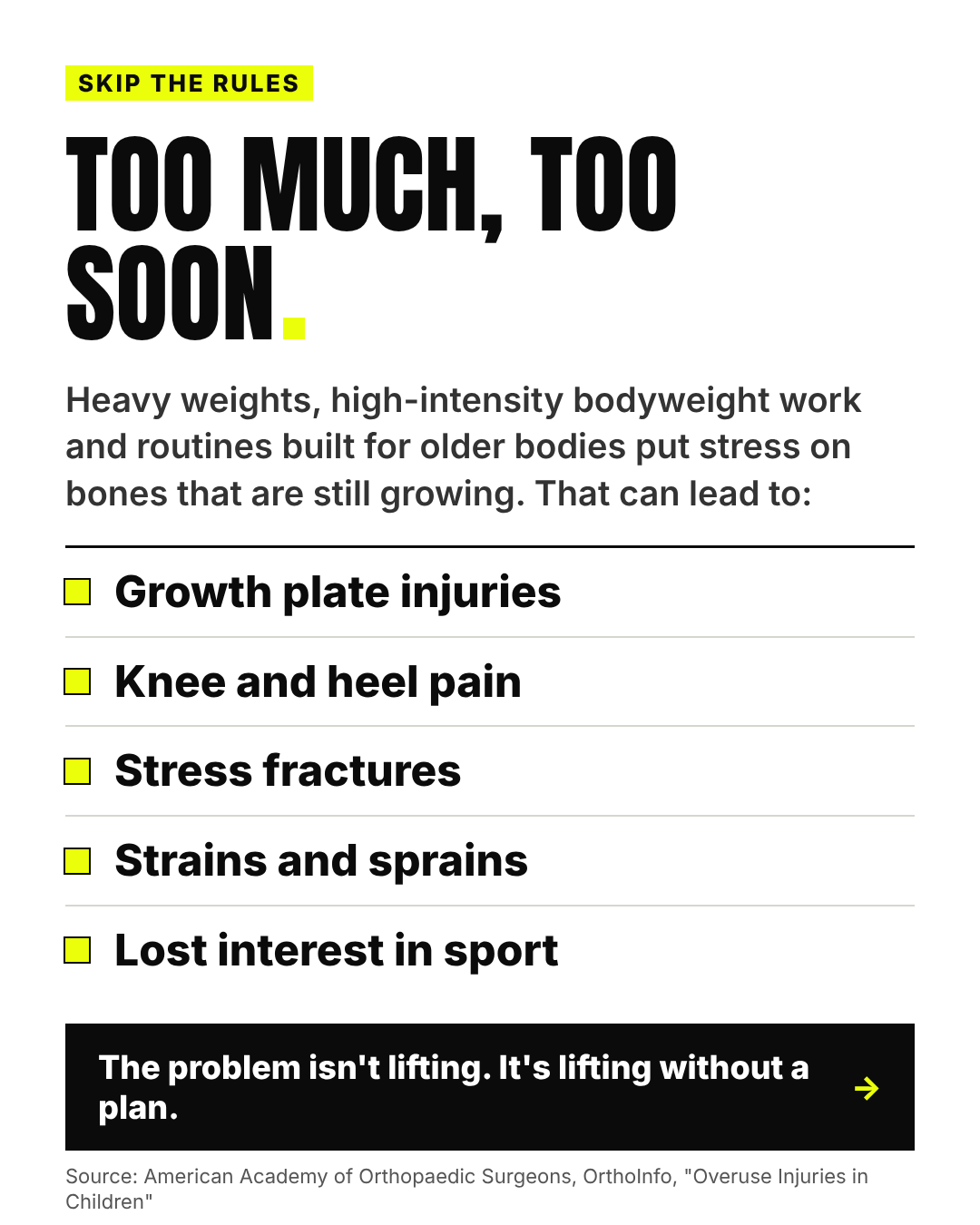
Strength by age (5)
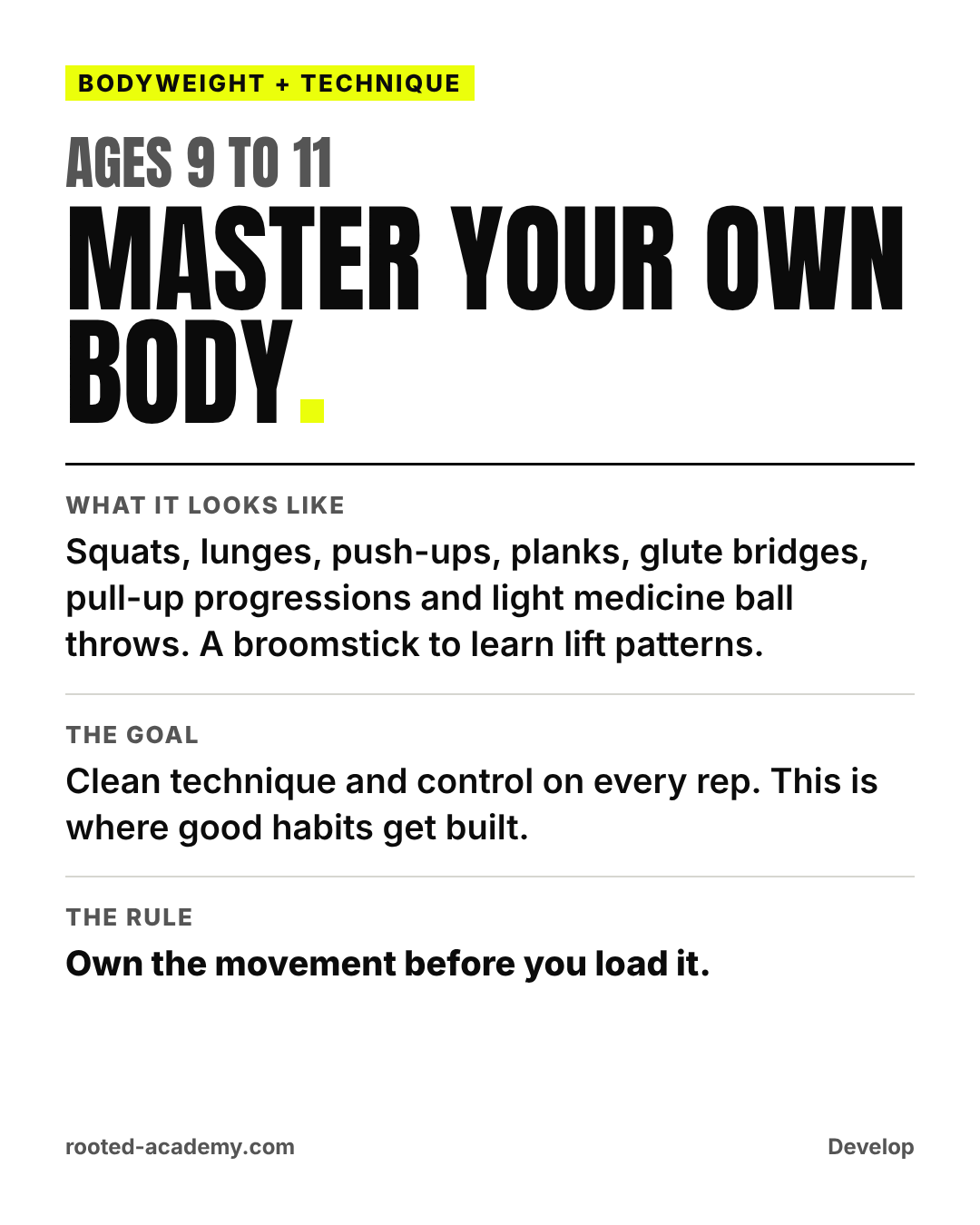
Age-appropriate strength work, from play-based movement to adding load slowly.
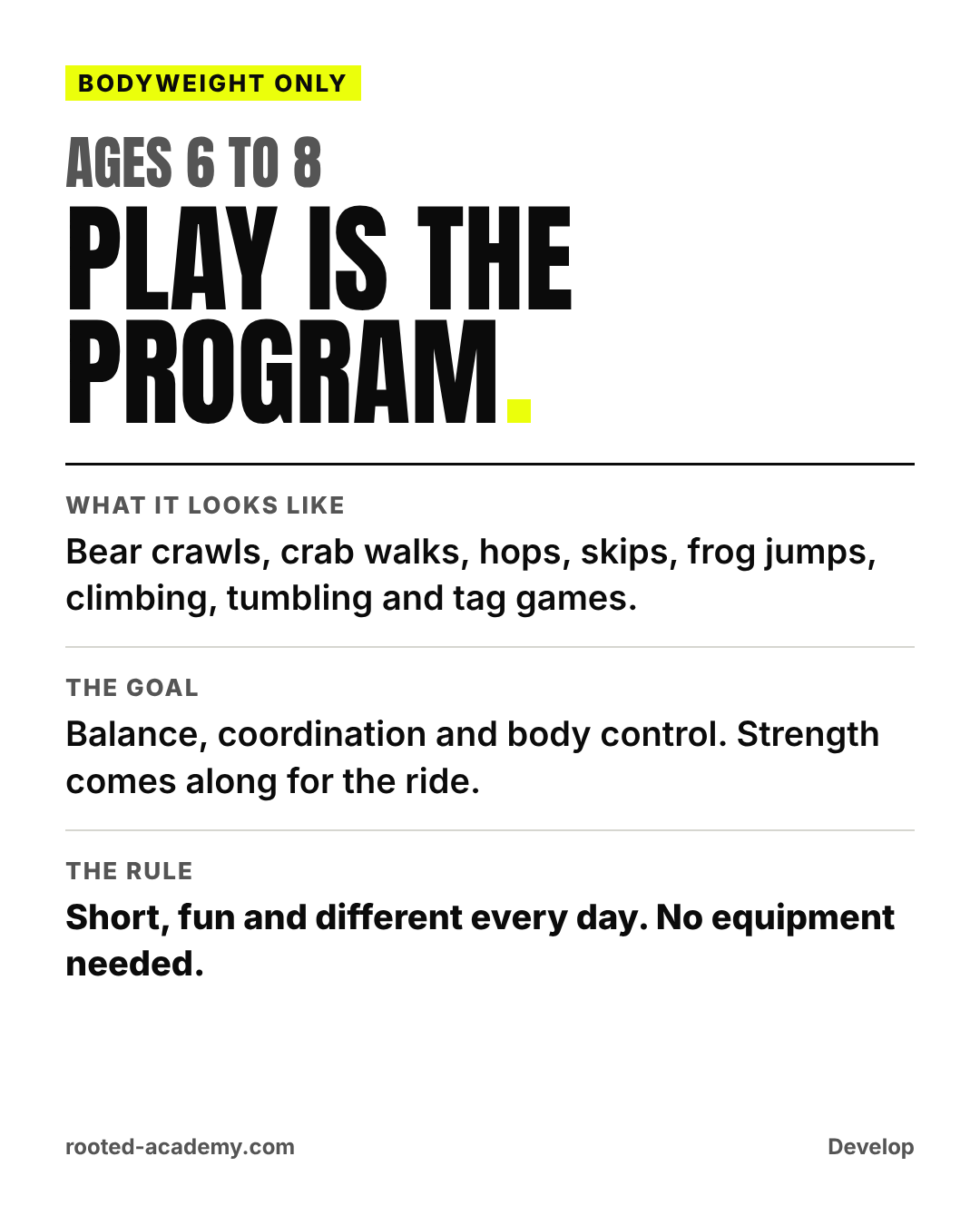
PhysicalAges 6-8: Play is the programBodyweight only, through games and movement
Faigenbaum, A. D., Kraemer, W. J., Blimkie, C. J. R., et al. (2009). Youth resistance training: Updated position statement paper from the National Strength and Conditioning Association. Journal of Strength and Conditioning Research, 23(5 Suppl), S60–S79. nsca.com
Stricker, P. R., Faigenbaum, A. D., McCambridge, T. M., & Council on Sports Medicine and Fitness. (2020). Resistance training for children and adolescents. Pediatrics, 145(6), e20201011. American Academy of Pediatrics. aap.org
National Strength and Conditioning Association. Youth performance and fitness: Strength and conditioning information for parents. nsca.com
American Academy of Orthopaedic Surgeons, OrthoInfo. Overuse injuries in children. orthoinfo.org
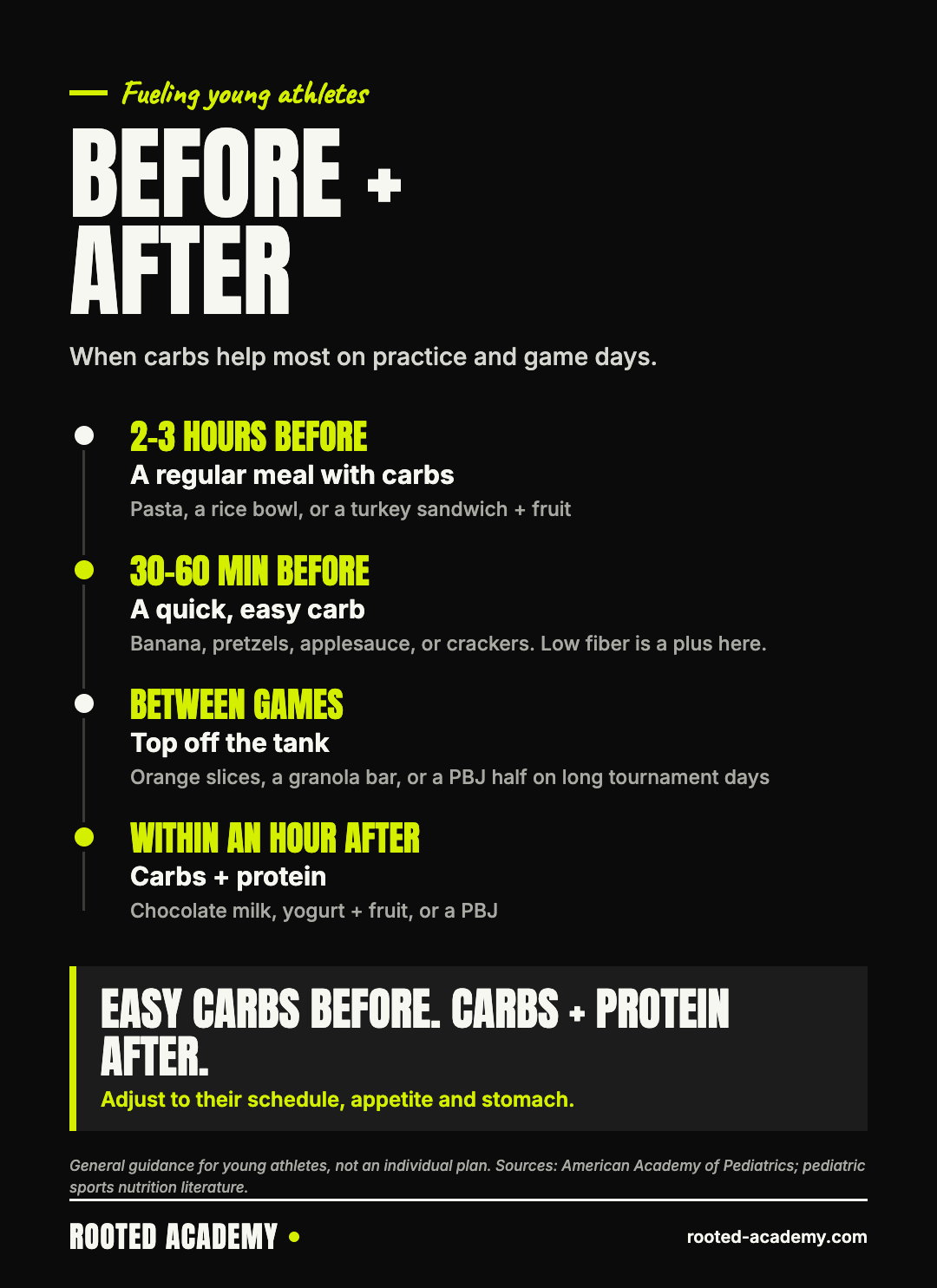
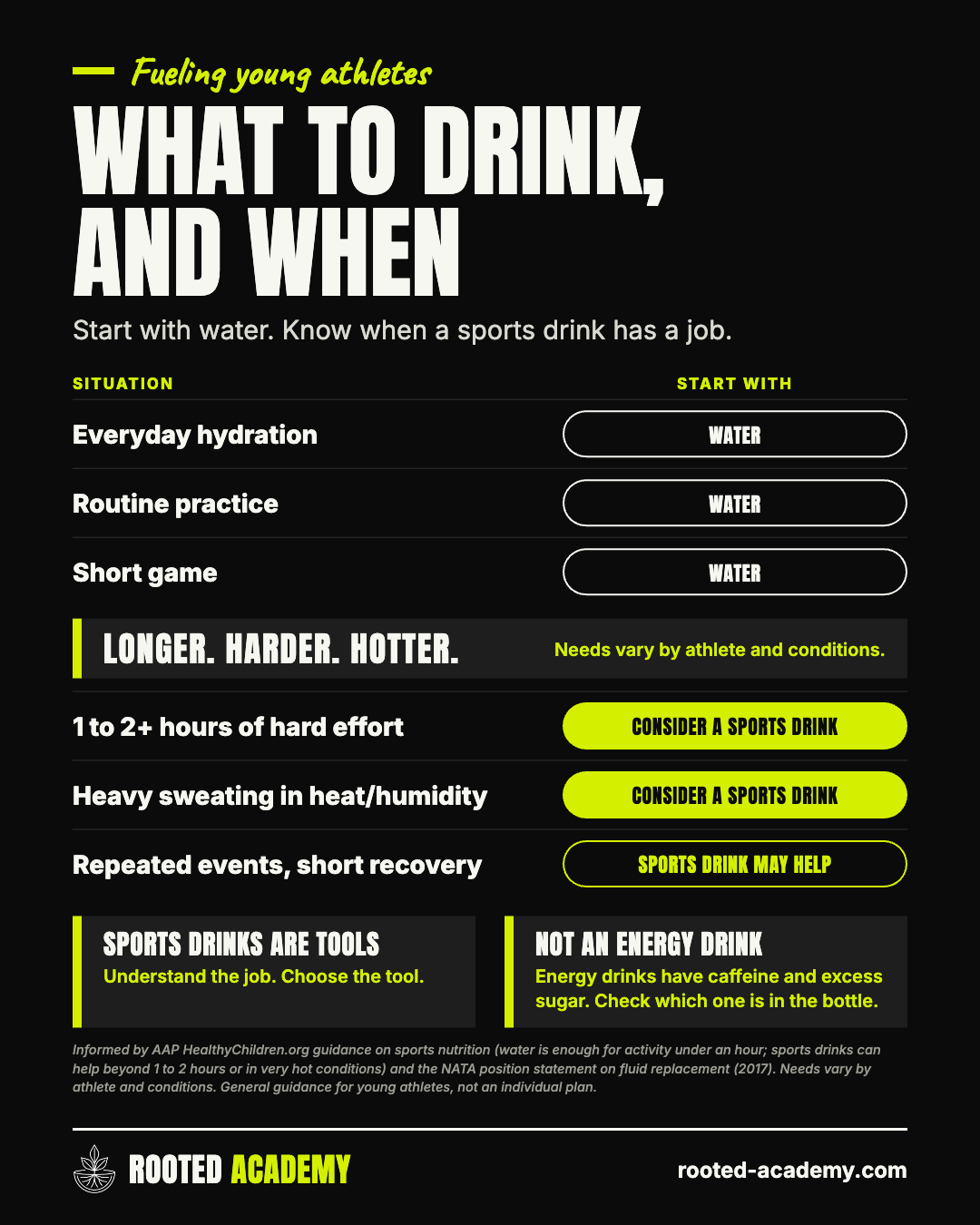
Fueling at practice (2)
Practice-day timing and what to drink, ready to share with team parents.
Kinsella, S. (2017). Sports nutrition for busy families and busy lifestyles. American Academy of Pediatrics, HealthyChildren.org. healthychildren.org
Hydration
Kinsella, S. (2017). Sports nutrition for busy families and busy lifestyles. American Academy of Pediatrics, HealthyChildren.org. healthychildren.org
McDermott, B. P., Anderson, S. A., Armstrong, L. E., et al. (2017). National Athletic Trainers' Association position statement: Fluid replacement for the physically active. Journal of Athletic Training, 52(9), 877–895. doi
American Academy of Child and Adolescent Psychiatry. Caffeine and Children (Facts for Families). aacap.org
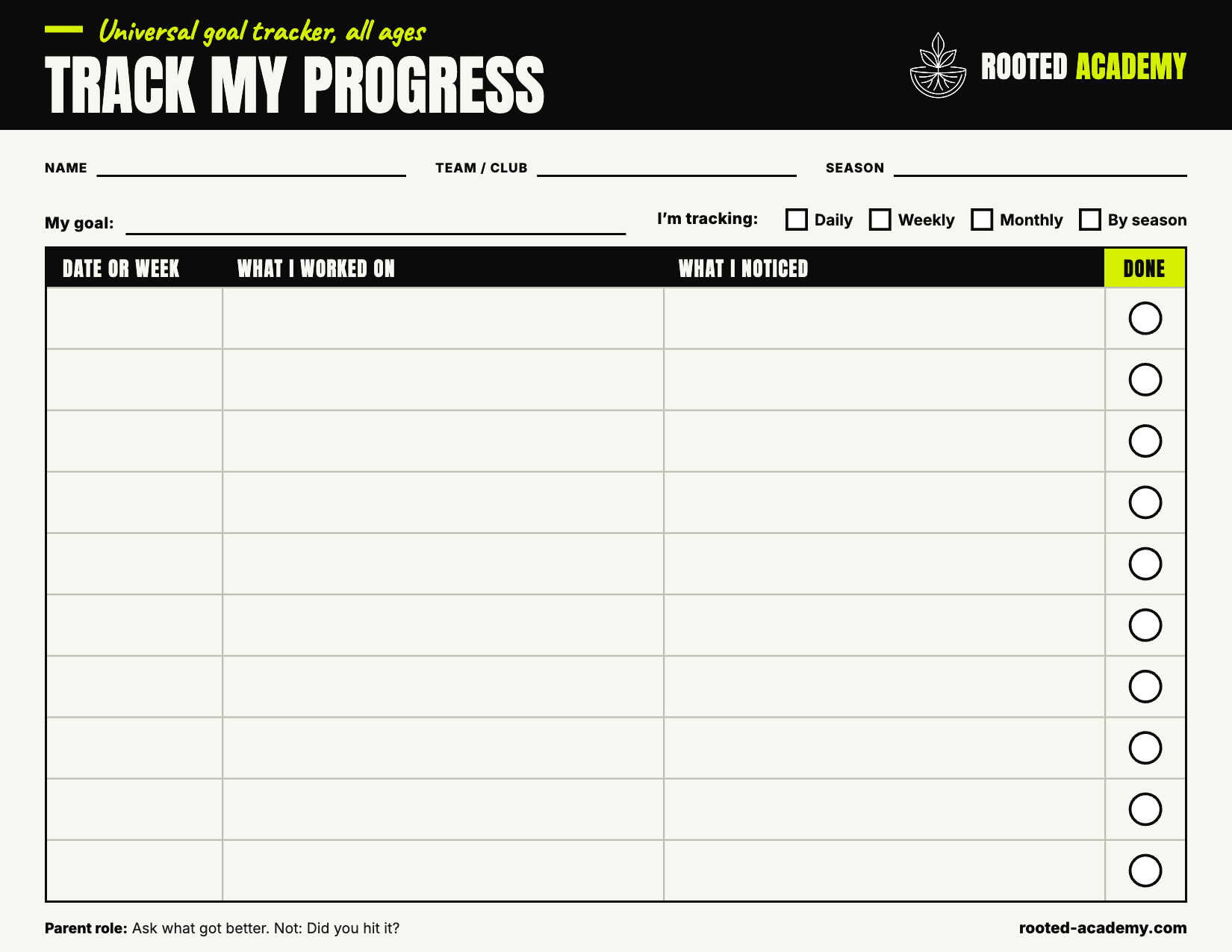
Goals (1)
One page for any age or sport, for athletes to set and track their own goals.
MindUniversal goal trackerOne page for any age or sport
Côté, J. (1999). The influence of the family in the development of talent in sport. The Sport Psychologist.
Côté, J., & Hay, J. (2002). Children's involvement in sport: A developmental perspective. In Psychological Foundations of Sport.
Bandura, A., & Schunk, D. H. (1981). Cultivating competence, self-efficacy, and intrinsic interest through proximal self-motivation. Journal of Personality and Social Psychology.
Locke, E. A., & Latham, G. P. (2002). Building a practically useful theory of goal setting and task motivation. American Psychologist.
General guidance for young athletes, not an individual plan.
Running a club?
Bring Development Culture™ to your whole club
A development-first program your club runs and owns, designed and supported by Rooted Academy.